
 Millennium Centre:


Noticing that a dental implant fell out is alarming. Understanding what component has come out, what it means, and when to seek care can help you respond calmly and reduce the risk of further complications.
Knowing which part of the implant system has come out, and what to do before your dental implant appointment, can make a meaningful difference to your options and outcomes.
Quick Overview
- A dental implant system has several components: the titanium post (fixture), the abutment, the abutment screw, and the crown. Any one of these can become loose or fall out.
- People who have had dental implant surgery may be affected, particularly those in the early healing period or with known risk factors such as gum disease or bruxism.
- Identifying which component fell out determines the urgency and type of treatment needed; some situations are straightforward to resolve; others require further assessment.
- The cause of the failure, how much bone and gum tissue surrounds the implant site, overall oral health, and how quickly dental care is sought all affect what treatment may be appropriate.
- Individual outcomes vary. A clinical examination and imaging are needed before any treatment decisions are made.
Keep reading to understand which implant component may have come out, what to do immediately, and what factors can contribute to implant complications.
Which Part of the Dental Implant Actually Fell Out?
When a dental implant falls out or comes loose, the first question a dentist needs to answer is: which component are we dealing with? Knowing this changes both the urgency and the likely treatment path.
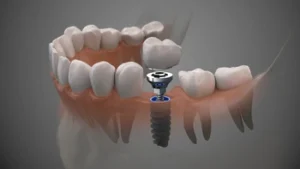
A dental implant is a multi-part system. It includes the titanium post (also called the implant fixture), which is surgically placed into the jawbone. Above that sits the abutment, connected by an abutment screw. On top of the abutment rests the dental crown, the visible tooth-shaped cap.
Each of these can become loose or displaced: 
- The implant crown: The most common component to come loose. If only the crown has come off, the titanium post may still be fully integrated in the jawbone. This is often a straightforward restorative fix.
- The abutment or abutment screw: A loose abutment screw can allow the crown and abutment to wobble or fall away. The implant fixture itself may still be secure.
- The healing cap or cover screw: This temporary component, placed during the healing phase after implant surgery, can occasionally become dislodged. It does not indicate implant failure.
- The entire implant fixture: This is the least common scenario. When the titanium post itself comes out, it means osseointegration has not been maintained. This is considered a failed implant and requires further clinical assessment before any replacement is considered.
Patients often describe any part of the implant system as “the implant,” so it is worth keeping the piece that came out and bringing it to your dental appointment.
What Should You Do Immediately If a Dental Implant Fell Out?
If a dental implant fell out or a component has come loose, the following steps can help protect the site before your dental appointment.
Keep the piece. Store it in a clean, sealed container. Do not wrap it in tissue or discard it, as your dentist may be able to assess or reuse it.
Gently rinse the area with warm salt water to reduce bacterial activity at the implant site. Avoid alcohol-based mouthwash, as this can irritate the surrounding tissue.
Eat soft foods and avoid putting pressure on the affected area. Do not attempt to reinsert any part of the implant yourself, as this increases the risk of introducing bacteria and damaging the implant site.
Contact your dentist promptly to arrange a dental appointment. The sooner an assessment is done, the more options may be available. Leaving a dislodged component untreated can lead to bone loss at the implant site, which may complicate any future treatment.
If you experience severe pain, swelling, or signs of infection such as discharge or fever, seek dental care on an urgent basis.
Why Do Dental Implants Fall Out or Fail? Key Risk Factors
Dental implant complications are not common, but they do occur. Understanding the contributing factors can help you and your dentist make informed decisions.
Peri-implantitis and poor oral hygiene
Peri-implantitis is an inflammatory condition affecting the gum tissue and bone surrounding a dental implant, driven by bacterial plaque accumulation. Over time, if not managed, it can lead to progressive bone loss around the implant, which may ultimately cause the implant fixture to fail. Gum disease and peri-implantitis around dental implants share similar risk factors, with poor oral hygiene among the primary modifiable contributors.
 Insufficient bone density
Dental implants require adequate jaw bone volume and density to support osseointegration. Where bone loss has occurred prior to implant placement, additional procedures may first be needed to build sufficient bone support. If bone loss develops after placement, the implant may gradually lose its foundation. Individual bone healing capacity varies.
Teeth grinding (bruxism)
Grinding or clenching places excessive pressure on the implant and its components. If you grind your teeth, the effects of bruxism on dental structures are well documented, and discussing this with your dentist before and after implant placement is important for long-term implant care.
Medical conditions and medications
Certain systemic conditions, including uncontrolled diabetes and osteoporosis, can affect bone healing and the body’s response to the implant. Some medications, particularly bisphosphonates used for bone conditions, require careful discussion with your dentist prior to implant surgery. Always share a full medical and medication history at your consultation.
Inadequate healing after implant surgery
The osseointegration process typically takes two to six months. Disrupting the healing process through excessive loading, poor nutrition, or ignoring aftercare instructions can increase the risk of early implant failure.
How Is a Loose or Failed Dental Implant Treated?
Treatment depends entirely on which component fell out, the condition of the surrounding bone and gum tissue, and the cause of the problem. Individual outcomes vary.
- Loose or lost crown: In many cases, the crown can be re-cemented or replaced. The dentist will inspect the abutment and underlying implant to ensure the fixture is still stable.
- Loose abutment screw: If the titanium post is well-integrated and the site is clean, a dentist can often replace or re-torque the abutment screw at a dental appointment.
- Failed implant fixture: Where the entire implant has come out, the dentist will assess the implant site, including bone volume, gum health, and the cause of failure before discussing whether replacement may be possible. Depending on the state of the site, a period of healing and potentially bone grafting may be required before a new implant procedure is considered. Alternative tooth replacement options, including a dental bridge or removable denture, may also be appropriate to discuss.
In all scenarios, the dentist will likely take X-rays and may use 3D imaging to assess the surrounding bone. Antibiotic rinses or systemic antibiotics may be prescribed to manage or prevent bacterial infection at the implant site.
How to Maintain Implant Health and Reduce Complications
With appropriate care, dental implants can function well for many years. Regular dental check-ups and consistent oral hygiene are among the most important factors in long-term implant health.
Practical steps for maintaining your implant include:
- Brush thoroughly twice daily, paying attention to the gumline around the implant. Soft-bristled brushes and implant-specific floss or interdental brushes can help clean areas that are difficult to reach.
- Floss or use interdental brushes daily to disrupt plaque buildup below the gumline, where peri-implantitis commonly begins.
- Attend regular check-up appointments so your dentist can monitor the implant site, surrounding bone, and gum health. The frequency of check-ups will depend on your individual risk profile.
- Discuss bruxism with your dentist. If you grind your teeth, an occlusal splint may help reduce excessive pressure on the implant and its components during sleep.
- Follow all post-surgical instructions after implant surgery. Avoiding excessive pressure at the implant site during the healing period supports bone healing and osseointegration.
Individual factors affect how well any of these measures work for a given person.
A Considered Approach to Dental Implant Complications
 If a dental implant fell out or feels loose, the right first step is to contact a dentist promptly. Early assessment means more treatment options are typically available and reduces the risk of complications such as bone loss or bacterial infection at the implant site.
At Carindale Family Dentist, Dr Grace Kim has additional training and experience in implant surgery and welcomes patients experiencing implant complications, whether or not they are existing patients. To arrange an assessment, contact the clinic directly.
Phone: (07) 3324 9172
Frequently Asked Questions
What should I do if my dental implant fell out completely?
Keep the component in a clean, sealed container and contact your dentist promptly. Rinse the area gently with warm salt water and avoid eating on that side until you are seen. The treatment approach will depend on whether it is the crown, the abutment, or the implant fixture itself that has come out, and a dental X-ray will typically be needed to assess the site.
Can a dental implant be replaced after it falls out?
In some cases, yes. If the implant fixture has failed, a dentist will first assess the bone support and health of the implant site. Where sufficient bone tissue remains or can be rebuilt with bone grafting, a new implant procedure may be possible after a healing period. Individual suitability varies, and a full clinical assessment is needed before any decisions are made.
Note: Any surgical or invasive procedure carries risks. Before proceeding, you should seek a second opinion from an appropriately qualified health practitioner.
References
Healthdirect Australia. (2025). ‘Dental implant procedure’. Healthdirect Australia, 12 June. Canberra, ACT: Healthdirect Australia. https://www.healthdirect.gov.au/dental-implant
Australian Dental Association. (n.d.). ‘Dental Implants’. Teeth.org.au. Sydney, NSW: Australian Dental Association. https://www.teeth.org.au/dental-implants
Australian Dental Association. (n.d.). ‘Teeth Grinding’. Teeth.org.au. Sydney, NSW: Australian Dental Association. https://www.teeth.org.au/teeth-grinding
Better Health Channel. (n.d.). ‘Dental treatment’. Melbourne, VIC: Victorian Government. https://www.betterhealth.vic.gov.au/health/conditionsandtreatments/dental-treatment